
Every Thanksgiving, home cooks across the country face the same stress-inducing question: “Is my turkey thawed yet?” Whether it’s your first holiday feast or your fifteenth, mastering a safe and accurate turkey thawing timeline can make or break your Thanksgiving dinner. The secret lies in planning enough time—and knowing exactly how long it takes to thaw a frozen turkey by weight. The rule of thumb? About 24 hours per 4-5 pounds in the refrigerator, or 30 minutes per pound in cold water with frequent changes. Getting this step right ensures your bird stays juicy, flavorful, and safe to eat—no food poisoning, no last-minute panic on Thanksgiving morning.
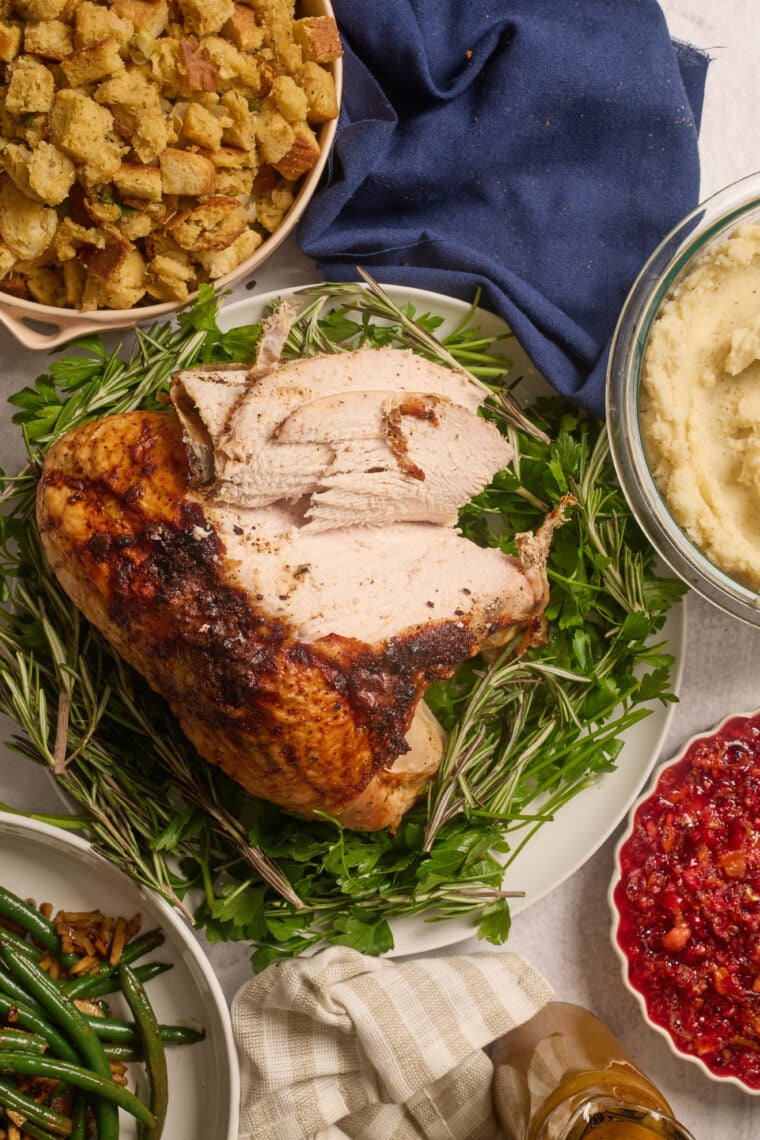
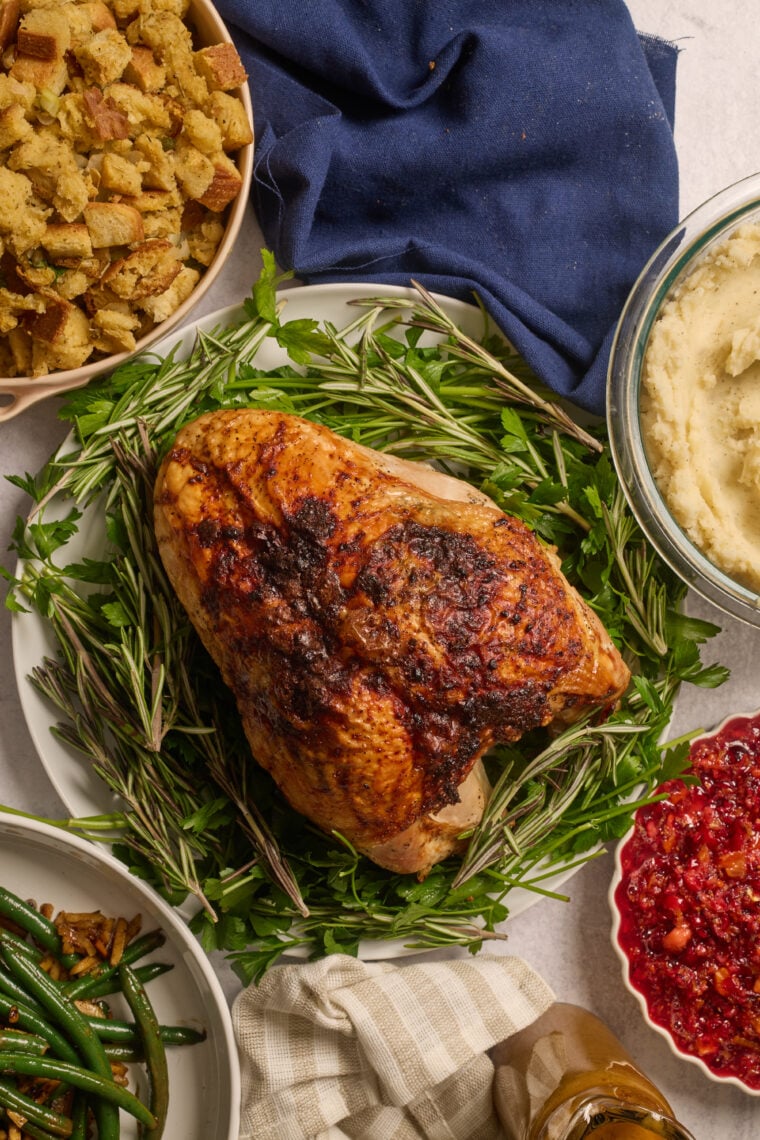
After you have perfectly thawed your turkey, try this incredible smoked spatchcocked turkey recipe, or if you are cooking for a small crowd, bake this juicy oven-roasted turkey breast. Don’t forget the sides to make this meal complete, like green bean almondine, oven-baked stuffing, simple gravy made with turkey drippings, no-cook cranberry-orange sauce, and easy overnight sourdough dinner rolls.
The Chemistry Behind Safe Turkey Thawing
At its core, thawing is a slow return to equilibrium. When you move a frozen turkey from the freezer to a refrigerator set below 40 degrees F (4 degrees C), you’re allowing ice crystals within the meat fibers to melt gradually while keeping bacterial growth at bay. The “danger zone” for foodborne bacteria spans from around 40 degrees F to 140 degrees F. That’s why the fridge and the cold-water method are the only safe thawing methods—they keep the turkey below that risky range.
Leaving a turkey on the kitchen countertop or in warm water speeds up the outer thawing, but the inside remains frozen. This uneven thawing creates the perfect environment for bacteria to multiply on the surface long before the center is safe to cook. Controlled, consistent temperatures are key—they prevent bacterial growth and preserve your bird’s quality.
Why Thawing Timelines Go Wrong
One of the biggest mistakes home cooks make is underestimating just how long it takes to thaw a large turkey. A 20-pound turkey can take nearly five full days in the fridge, while smaller birds like a 12-pound turkey still need a solid three days.
Forgetting to start thawing early enough, leading to the panic-driven switch to the cold-water method at the eleventh hour.
Unsafe thawing methods—like leaving the turkey out on the counter—can do more harm than good. Even when a wrapped turkey is left at room temperature for “just a few hours,” the outer portions enter the danger zone long before the core begins to thaw.
And let’s not forget fridge contamination: turkey juices can leak onto produce or other foods if the bird isn’t placed on a rimmed baking sheet or large platter.
Then there’s the issue of inconsistency. Sometimes, the outer flesh bends easily while the inner cavity still feels icy. If that happens, rotate the turkey occasionally in the fridge or adjust its placement to ensure even thawing.
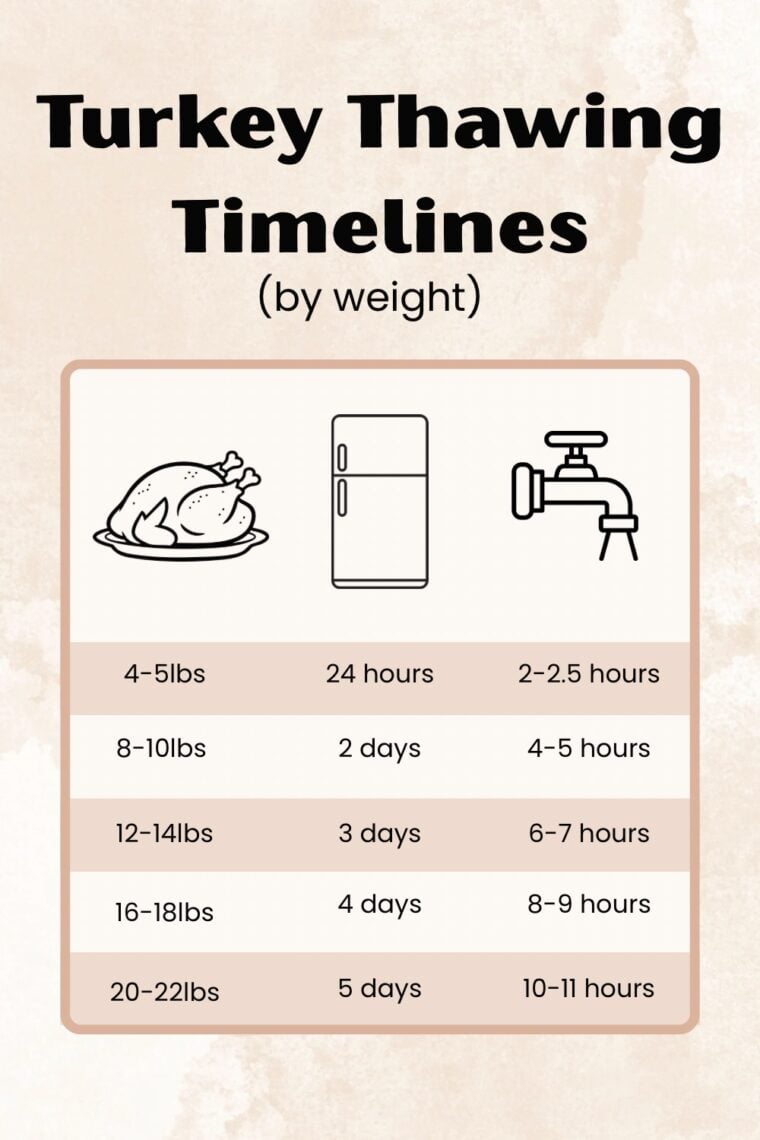
Thawing Timelines at a Glance
Refrigerator Thawing
40 degrees F/ 4 degrees C, in original packaging on a tray
- 4-5 lbs = 24 hours
- 8-10 lbs = 2 days
- 12-14 lbs = 3 days
- 16-18 lbs = 4 days
- 20-22 lbs = 5 days
Cold-Water Quick Thaw
food-safe bag, submerged, change water every 30 minutes
- 4-5 lbs = 2-2.5 hours
- 8-10 lbs = 4-5 hours
- 12-14 lbs = 6-7 hours
- 16-18 lbs = 8-9 hours
- 20-22 lbs = 10-11 hours
If you own a sous vide circulator, it can help maintain the perfect cold-water temperature and safely shorten thawing time. After you have thawed your turkey, check out my post on turkey internal temperatures at a glance for a perfectly cooked turkey.
Knowing When Your Turkey is Fully Thawed
The easiest way to tell if your thawed turkey is ready to cook? Flexibility and feel. The flesh should bend easily, there should be no hard ice core in the thickest part of the breast, and the joints (especially wings and legs) should move freely. The packaging will still feel cold but not frosty. If in doubt, gently press the cavity—if it’s still icy, give it more time or switch to the cold-water method.
Common Problems and Quick Fixes
If you’ve started thawing too late and the center’s still frozen, don’t panic. Simply seal the turkey in a leak-proof bag and submerge it in cold water, changing the water every 30 minutes until the bird feels pliable. Then, refrigerate it briefly while you prep your roasting pan.
If you thawed your turkey too early and are worried about spoilage, remember that fridge-thawed poultry can rest for 1-2 days before cooking. Cold-water-thawed birds, however, should be cooked immediately.
Concerned about cross-contamination? Always thaw your turkey on the lowest shelf of the fridge using a tray or rimmed baking sheet to catch any drips.
Smart Thawing Tips
Keep a mental “thaw time calendar.” If your Thanksgiving dinner is on Thursday, move your turkey from the freezer to the fridge on Saturday or Sunday – depending on its weight. That way, you’ll never run into a half-frozen bird come Thanksgiving morning.
You can safely refreeze raw turkey that’s been thawed in the refrigerator, though quality may dip slightly. For even thawing, rotate the turkey partway through its time in the fridge. And if the skin feels tacky after thawing, that’s totally normal- pat it dry before seasoning. That light tackiness actually helps crisp the skin beautifully during roasting.
Turkey Thawing in a Nutshell
A perfectly thawed turkey is the first—and arguably the most important—step towards a flawless holiday meal. Whether you’re preparing a 12-pound turkey for Christmas Eve or a 20-pound bird for Thanksgiving dinner, giving yourself plenty of time is the safest and most reliable path to success. Use the fridge method for the best texture, or the cold water method if you’re short on time. Avoid the countertop method or hot-water thawing at all costs—they invite dangerous bacteria and risk ruining your main dish.
So this year, skip the last-minute stress and start your thaw early. Your future self (and your guests) will thank you when that golden-brown bird comes out of the oven – juicy, flavorful, and safely cooked the right way.