

You finally set aside a cozy weekend to bake bread. You gather your flour, sugar, and salt, but then the recipe calls for “active-dry yeast,” and your pantry only has “instant.” Do you swap them? Proof them? Panic?

Yeast can be confusing, especially when grocery shelves list a dozen different types of yeast: rapid-rise, bread machine yeast, instant dry yeast, active dry yeast… and even fresh cake yeast tucked into the refrigerator section. The truth? They all come from the same species of yeast, Saccharomyces cerevisiae, but how they’re processed changed everything- from how you mix your dough to how high your bread rises.
Whether you’re a first-time bread baker or a seasoned home pro chasing the perfect pizza dough, this guide breaks down the main differences, the common mistakes, and how to get consistent, bakey-worthy results every single time.

The Chemistry of Yeast Activation
Yeast is a single-cell fungus that feeds on sugars and releases carbon dioxide and alcohol, the gas bubbles that make your bread dough rise. Both instant yeast and active-dry yeast perform the same job, but their granule size, processing, and rehydration needs change how quickly they get to work.
Active-dry yeast has larger, coarser granules coated in a protective layer. It needs to dissolve in warm water (about 100-110 degrees F) before it can “wake up.” If the water is too cool, it won’t activate; too hot, and you’ll kill it. This proofing step ensures that the live cells are awake before they meet the flour.
Instant yeast, on the other hand, has fine granules that dissolve instantly in dough. It’s dried at lower temperatures, which keeps more live cells active. You can mix it straight into your dry ingredients, skip the proofing step, and still get a quick, strong rise.
So while both yeasts produce the same end product, the process (and timing) differs: instant yeast has a faster start, while active dry is a slower, more traditional rise.
Common Problems (and Why They Happen)
If your dough didn’t rise, don’t panic – yeast issues are more common than you think.
Dead yeast is the number-one culprit. If your packet’s expiration date passed last year, or it was stored in a warm pantry instead of a dark, airtight container or fridge, the yeast may have lost its strength. Always check freshness by stirring a teaspoon of yeast with a pinch of sugar in warm water; if it foams in 10 minutes, it’s alive.
Using the wrong water temperature can also lead to failure. Yeast thrives around 105 degrees F, but anything about 120 degrees F starts killing those live cells. For active-dry, temperature matters most since it’s less forgiving.
Don’t forget time and environment. A slow or stalled dough rise can be caused by a cool kitchen. Instead of adding more yeast, simply give it time, or find a warm, draft-free spot (like your OFF oven with the light on).
| Type | Activation | Mixing Method | Rise Speed | Best For |
|---|---|---|---|---|
| Instant Yeast | No proofing needed | Mix directly into flour | Faster, strong rise | Faster, stronger rise |
| Active-Dry Yeast | Proof in warm water 100-110 degrees F | Proof in warm water, 100-110 degrees F | Slower, controlled rise | Artisan breads, sweet breads, cinnamon rolls |
Substitution Rule: You can swap 1:1, but watch your timing. Instant yeast works faster, so shorten rise time slightly or use less yeast (about 25% less for long-fermented doughs).
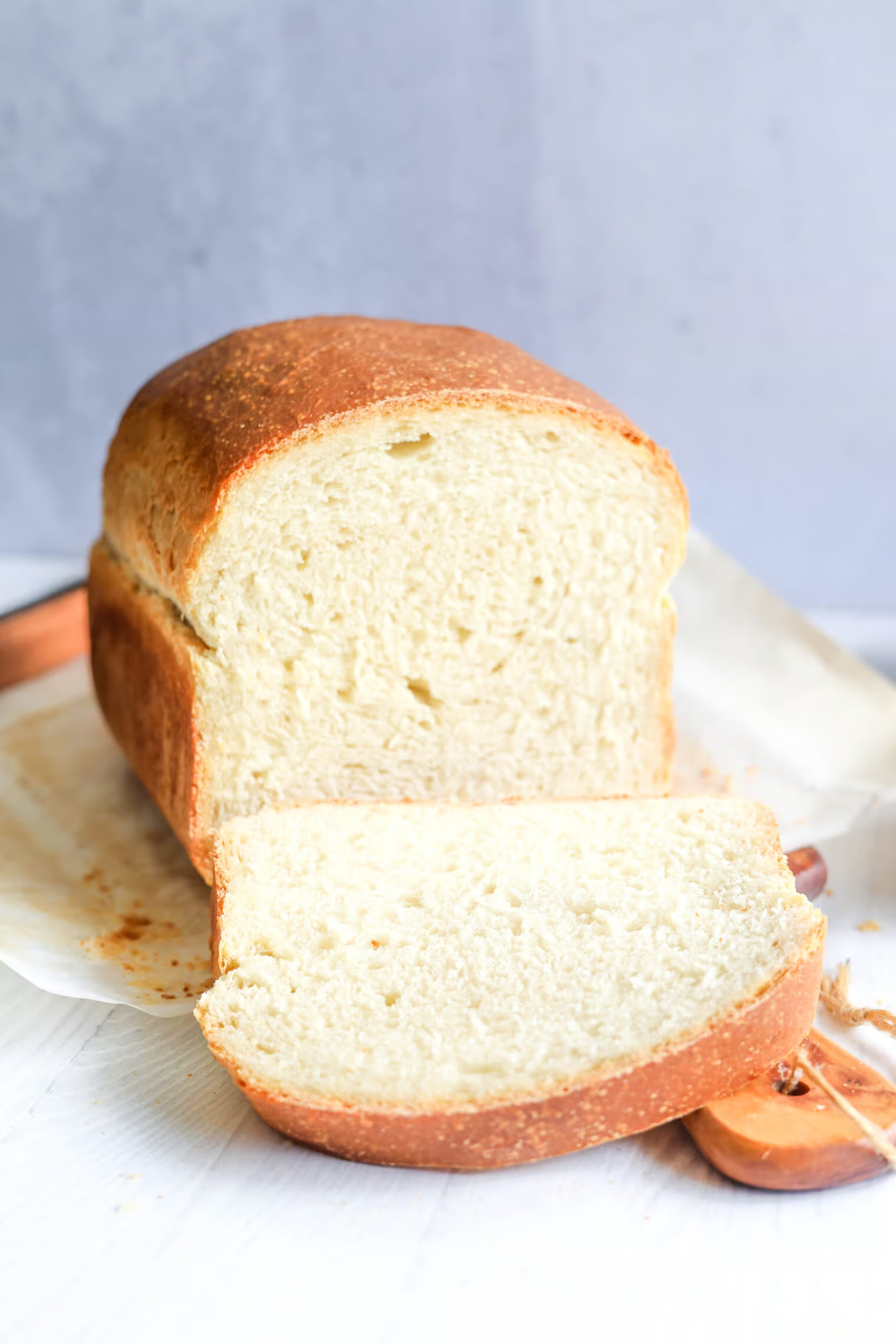
What to Watch (Cues for a Perfect Rise)
- Visual: Dough should double in size, forming a smooth, slightly domed surface.
- Touch: When you press a finger into the dough, it should spring back slowly, leaving a light indentation.
- Smell: A warm, mildly yeast aroma signals active fermentation, too sharp means overproofed.
- Temperature: Dough rises best around 75-80 degrees F.
Pro Tip: If your dough smells sour or collapses, it’s over-proofed. Gently reshape and let it rise again for a shorter period before baking.
Common Mistake & Quick Fix
| Problem | Fix |
|---|---|
| Yeast didn’t foam or activate. | The water was too hot or cold. Next time, verify with a thermometer before proofing, between 100-110 degrees F is ideal. |
| Dough rose too quickly and collapsed. | You may have used instant yeast in a recipe written for active-dry. Next time, reduce yeast slightly or proof in a cooler room. |
| Bread tastes overly yeasty. | Use less yeast and allow a longer, cooler fermentation (in the fridge overnight). Slower rises enhance flavor naturally. |

Smart Tips for Better Results
- Store yeast airtight & cold. Keep packets in a sealed jar in the fridge or freezer for longest shelf life.
- Add yeast last. If mixing by machine, add yeast after combining flour and salt, direct salt contract can weaken yeast.
- Use preferments. Try a poolish or biga, they add flavor depth and flexibility, especially for artisan-style loaves.
- For enriches doughs (like brioche or cinnamon rolls): Expect a slower rices since butter, sugar, and eggs inhibit yeast activity.
- Test before baking day. If you’re not sure about an old jar, run a quick proof test, it’s a ten-minutes insurance policy.
Yeast FAQs
Do I need a proof instant yeast?
No. You can mix it straight into your dry ingredients; that’s what makes it “instant.”
Can I substitute instant yeast for active-dry yeast?
Yes, use the same amount, but shorten the rise time or use about 25% lss for long fermentations.
Does yeast type affect flavor?
A little. Active-dry yeast often produces a deeper flavor due to slower fermentation, while instant yeast creates a lighter, milder taste.
Why didn’t my active-dry yeast foam?
Your water temperature may have been too low, or the yeast may have expired. Always check freshness before mixing.
Is one yeast better for beginners?
Instant yeast is more forgiving, requires no proofing, has faster results, and has fewer temperature worries. Active-dry teaches patience (and gives great flavor), so it depends on your baking style.
Related Lessons
- Foolproof Yeast in Baking (make it work every time)
- All Types of Flour and Which is Best
- The Chemistry of Ingredients
- Baking Soda vs. Baking Powder (and are they interchangeable)

Which Yeast is Best
When it comes to instant vs. active-dry yeast, it’s less about which one’s “better” and more about which one suits your style. If you love fast, easy dough that fits into your busy schedule, instant yeast is your best friend. If you prefer slower, more hands-on baking with deep flavor and texture, active-dry yeast gives you that classic artisan touch.
Either way, remember: yeast is alive, treat it gently, keep it fresh, and give it warmth and time. Whether you’re baking pizza dough, sweet rolls, or your first loaf of bread, you’ll soon find that yeast isn’t intimidating at all; it’s just waiting for the right conditions to make your kitchen smell like heaven.


